Bánh Xèo and the Long Table
19 March 2026, from about half past five until quarter past six — the last proper dinner of the trip, in Ho Chi Minh City, with a table full of people and far too much food.
Thirteen photographs, and between them they cover the best single dish I ate in Vietnam.
Bánh xèo
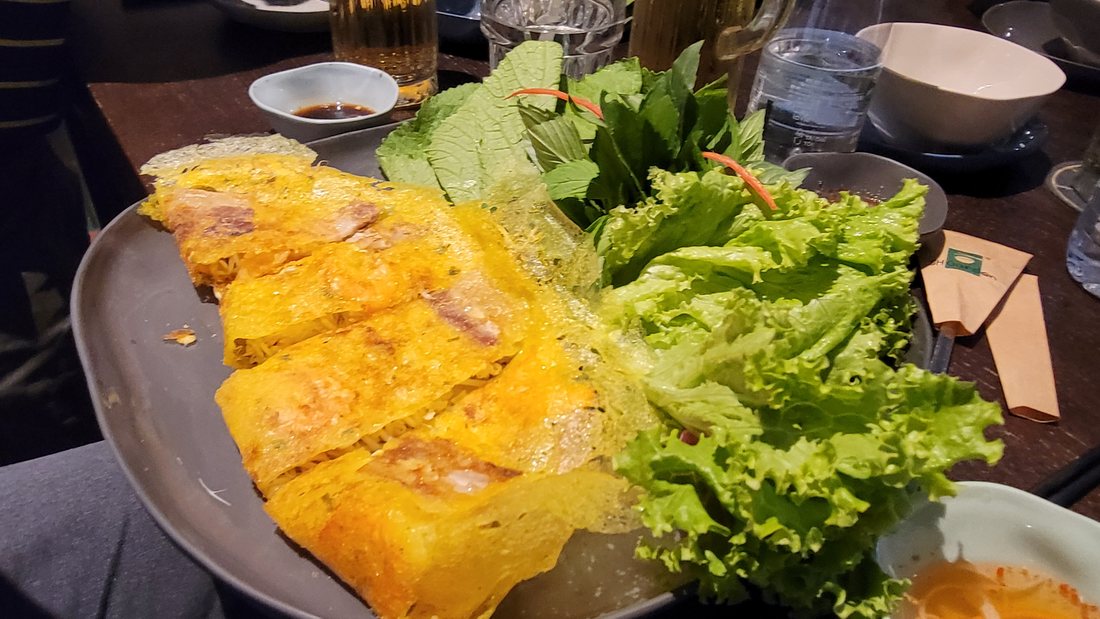
Bánh xèo means roughly “sizzle cake” — the name is the sound the batter makes when it hits the hot pan. It is one of the better-named foods I know of.
Reading the photograph:
- The crepe is turmeric yellow, and this is the part people get wrong: there is no egg in it. The batter is rice flour, coconut milk, water and turmeric. The colour is a spice, not a yolk.
- It is thin and lacy at the edge — you can see the translucent, blistered rim in the picture. That fine lacework is the tell for a well-made one; a thick, uniform, omelette-like disc means the pan was not hot enough or the batter was too heavy.
- The filling is pork and shrimp with bean sprouts, folded over.
- Beside it: mustard leaf, perilla, lettuce and herbs, and a bowl of nước chấm.
⭐ The herb platter is not a garnish, it is the cutlery. You tear off a piece of crepe, wrap it in a leaf, dip it, and eat it with your hands. The greens are structural. Serving bánh xèo without a mountain of leaves is like serving a taco without the tortilla — and I had eaten it that way, plated, with a decorative sprig, more than once, without ever wondering why it felt awkward.
The rest of the table
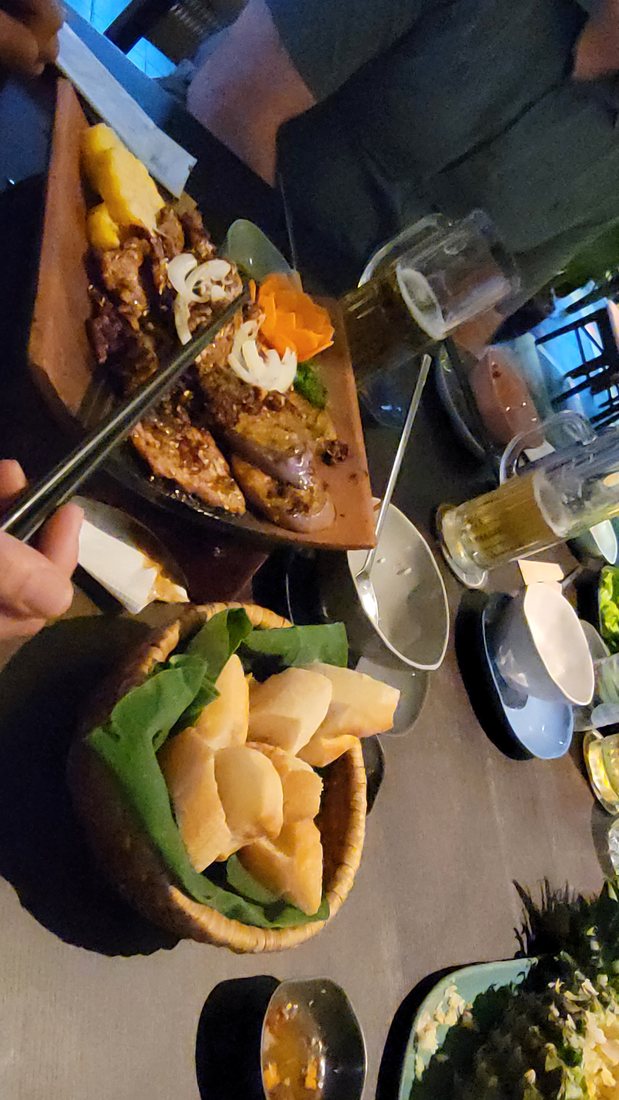
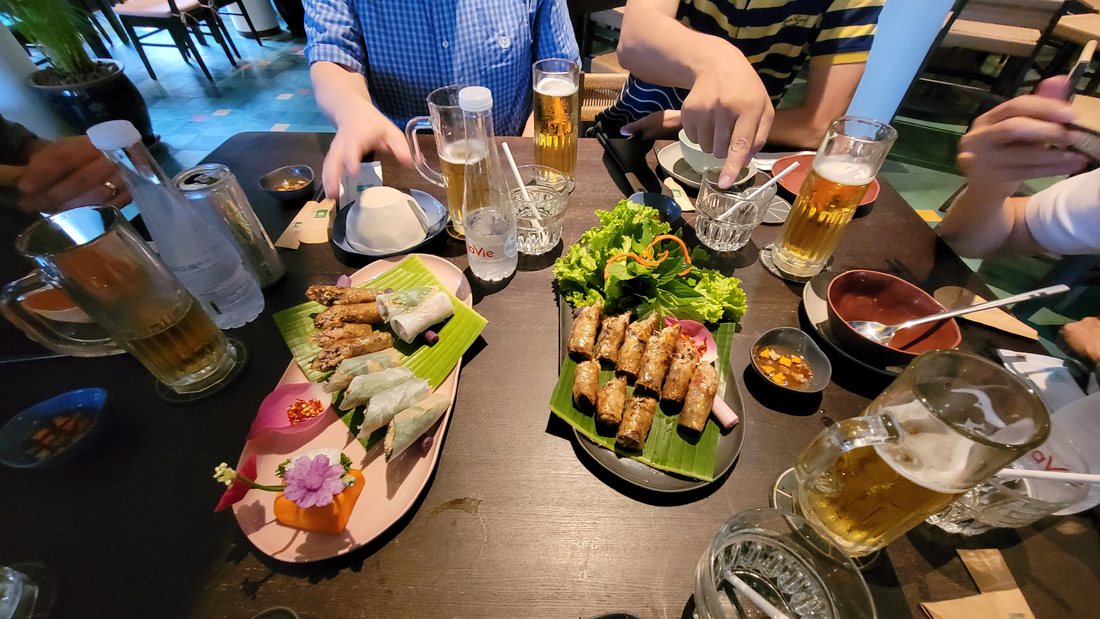
That platter is the table’s whole argument in one object: the protein and the greens arrive on the same board, uncombined. Nothing has been wrapped for you. The leaves are laid alongside the meat at the same length, in the same quantity, as an equal component — not scattered over it as decoration.
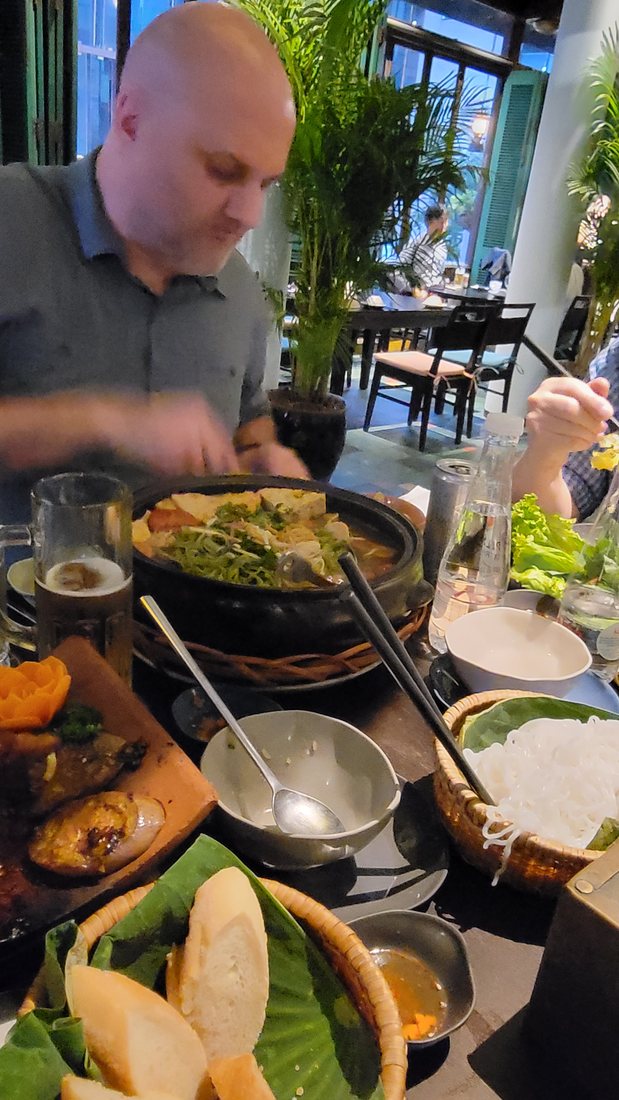
⭐ And then a basket of split bánh mì next to a clay pot. French bread, put on the table as the thing you soak a Vietnamese braise with. This is the same borrowing as the pâté in the sandwich, running the other way — the loaf did not stay in the bakery, it went and got a job in the middle of a hotpot.
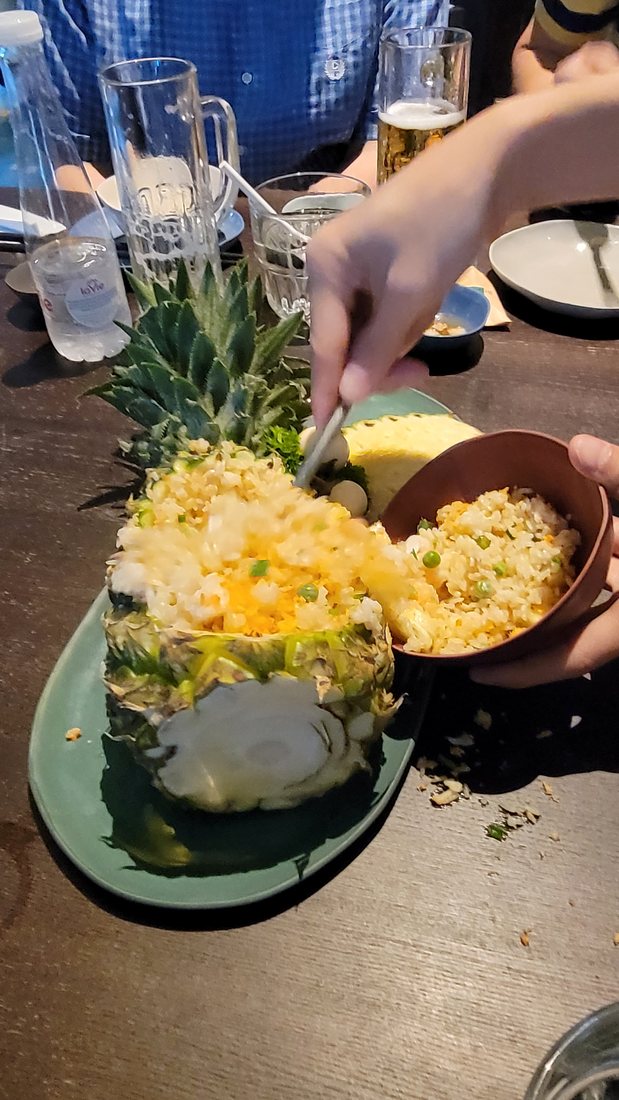
The pineapple rice is the one I have the least to say about and it is the one everyone will ask about. It is fried rice, served in a hollowed-out half pineapple, and I am not going to pretend it is an ancient tradition — it is a presentation, it is fun, and it tasted good. The pineapple does put a bit of sharpness and steam back into the rice from underneath, which is more than nothing.
⚠ Left unidentified on purpose: the pot of greens next to the grilled board, and two or three other dishes in the wider frames. I can see them; I cannot name them; and I would rather have a gap on this page than a confident guess. That is the house rule here and it has already saved me twice on this trip.
The thing about eating this way
Everything on that table arrived when it was ready and went in the middle. Nobody had a course. People built their own mouthfuls out of a shared pile of components — a leaf, a piece of crepe, a dab of sauce, a herb — and the assembly happened at the table, per bite, by the person eating it.
That is not a stylistic difference from how I usually eat. It changes what the cook is responsible for. The kitchen’s job is to send out good components at the right temperature; the diner’s job is the composition. A Western plate arrives already composed and the cook has made every decision for you.
I do not think one is better. But it explains why so much Vietnamese food loses something in an American dining room: we take a dish designed to be assembled per bite, assemble it in the kitchen, and serve the result ten minutes later.
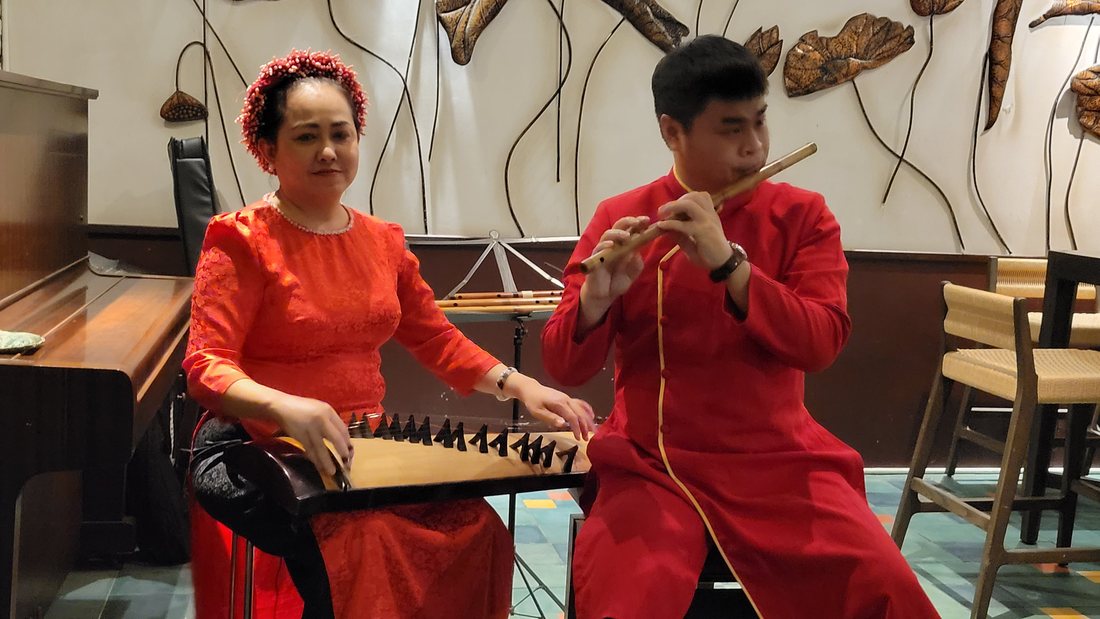
There was live music while we ate: a đàn tranh — the long Vietnamese zither, sixteen or seventeen strings over movable bridges, played with picks worn on the fingers — and a flute, both players in red áo dài, working from the corner of the dining room.
⚠ I am putting this here as the room, not the meal, and I want to be careful about it: this is a restaurant hiring musicians for a dining room, which is a commercial arrangement, not a folk custom I walked in on. It was lovely and I would not want to dress it up as anything more.
This was one of the hosted meals — we were taken out by our vendor — and I am deliberately not going to make a page about the people at the table. This section is food forward, and the interesting thing here is the bánh xèo and how it is meant to be eaten, not the seating plan.
Worth knowing for the rest of the section, though: the big group dinners are the exception in these photographs. Most of what I ate in Vietnam I found on my own — see the day in Đồng Nai for the honest version of that.
Next: The Day in the Middle of Nowhere — an hour east of the city, twice in one day.
Comments (0)