The Roux
This is the part of gumbo I have spent the most time on, so this page is mine rather than a summary of anybody else’s.
The single most useful thing I can tell you is that a roux is not one dial.
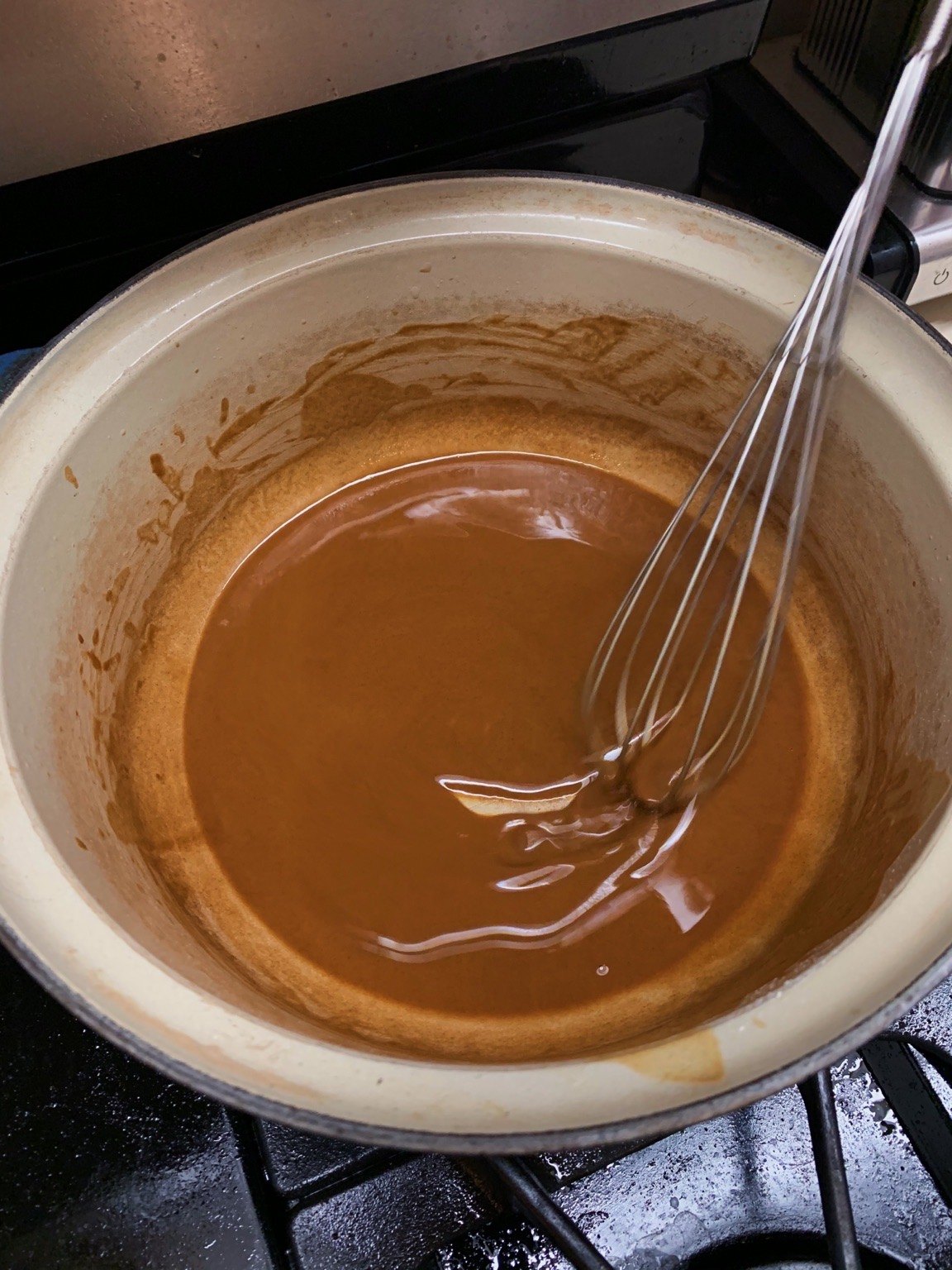
Three variables, not one
Nearly everything written about roux treats it as a question of how dark. That is one of three, and the other two change the result just as much:
1. The darkness. Blond, peanut, copper, chocolate, near-black. This is the one everybody talks about.
2. The flour. Ordinary all-purpose is the default and it is fine. But flour is not a constant — protein content varies a great deal between brands, and a lower-protein flour behaves differently in a long cook.
3. The fat. ⭐ This is the one people leave out, and it may matter most. Butter, bacon grease, lard, vegetable oil, duck fat — each brings its own flavour and its own tolerance for heat.
🔴 A bacon-fat roux and a butter roux taken to identical colour are not the same ingredient. Not “similar with a nuance” — different. If you have only ever varied the darkness, changing the fat is the fastest way to find a gumbo you haven’t made before.
⚠ And the fat sets your ceiling. Butter contains milk solids and water, so it browns and then burns at a much lower temperature than oil or lard. You cannot take a butter roux as dark as an oil roux — the solids scorch first. If you want a genuinely dark roux, start with oil or lard. If you want butter’s flavour, accept a paler roux and get your depth elsewhere.
The darkness, honestly
Going darker buys you complexity and costs you two things: thickening power and margin for error.
Blond — barely coloured, tastes of the fat, maximum thickening. This is a French sauce roux.
Peanut to copper — nutty, noticeably toasty, still thickens well. A lot of very good chicken-and-sausage gumbo lives here.
Chocolate to near-black — deep, roasted, faintly bitter, genuinely complex. And it barely thickens at all.
⭐ That last point catches people out. The further you take a roux, the more the starch has broken down, so the darker your roux, the thinner your gumbo. If your best-tasting pot is also your runniest, nothing has gone wrong — that is the trade working as designed. Lean on okra or filé for body, or accept a thinner gumbo, which is traditional anyway.
🔴 And the darker you go, the easier it burns. Not “can burn” — burns, readily, in the last few minutes, in the time it takes to answer the door. A scorched roux is not rescuable and it is not seasonable. You throw it out and start again, and anyone who tells you they have never done this is not making dark roux.
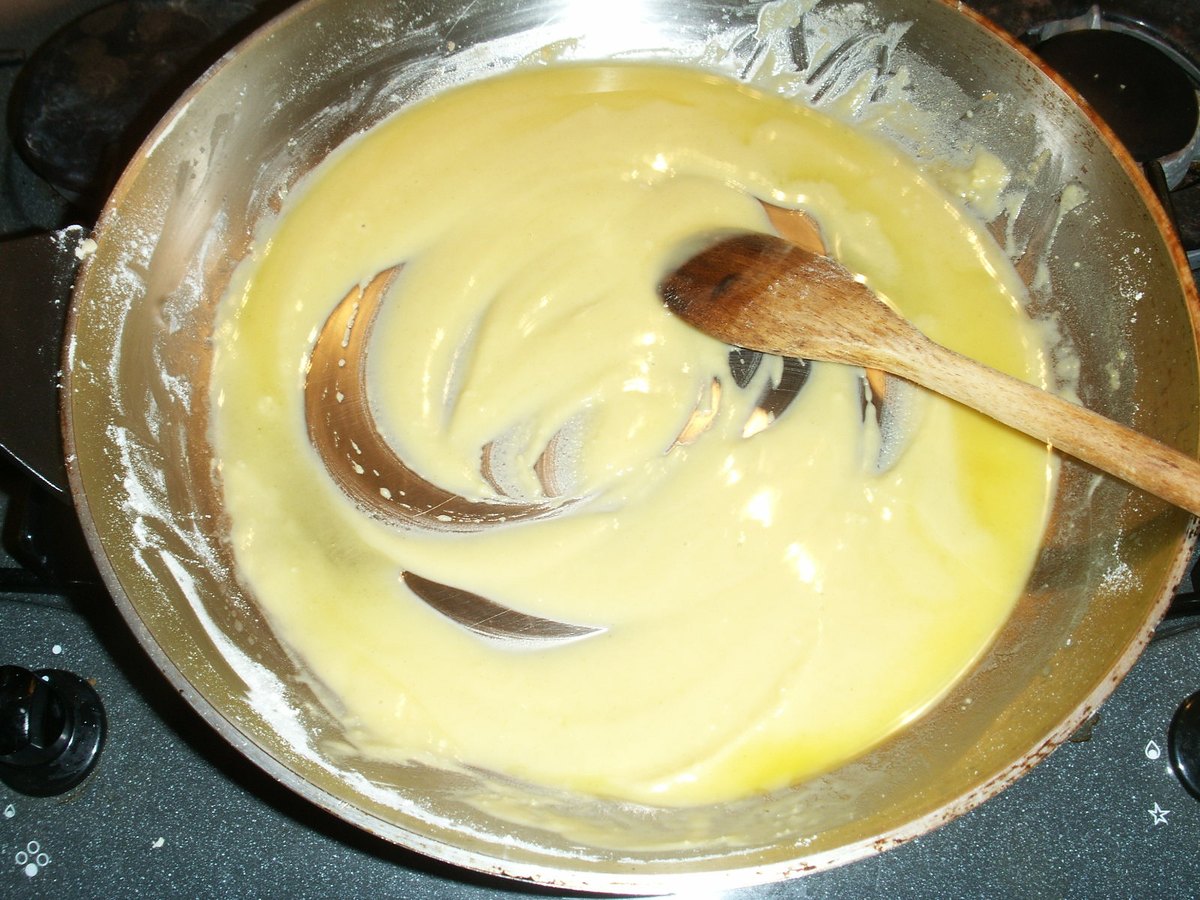
🔴 The one rule: never undercook it
An underdone roux tastes pasty, and of raw flour.
I want to be emphatic because it is the most common failure in the dish and the most fixable: you cannot correct it downstream. No amount of seasoning, simmering, or stock covers it. That flat floury note in a disappointing gumbo is almost always an undercooked roux.
If you are hesitating, keep going. The failure mode of stopping too early is a gumbo that tastes vaguely of nothing. The failure mode of going too far is a burnt batch you can smell instantly and simply remake. One of those wastes the whole pot; the other wastes twenty minutes and a cup of flour.
Doing it on the stove
The traditional way, and the one that demands your attention.
Equal parts fat and flour by volume is the usual starting ratio — a cup of each makes plenty for a large pot. Heavy pan, medium heat, and whisk or stir essentially continuously. Cast iron holds heat well, which helps the colour develop evenly and hurts you if you need to stop fast.
Expect thirty-five minutes to an hour to reach chocolate. It cannot be rushed with higher heat; all that does is scorch the flour while the colour is still developing.
⚠ Have your trinity chopped and within reach before you start. The classic move is to dump the onion, celery and bell pepper straight into the finished roux — the cold vegetables stop the cooking instantly, which is the only brake you have.
⚠ And a hot roux is genuinely dangerous. It is near-molten fat that sticks to skin. Long sleeves, no bare feet, no distractions, nobody underfoot.
⏭ The oven method — my next experiment
There is a way to make a roux in the oven, and I have not tried it yet.
The idea is that you put the fat and flour together in a heavy oven-safe pot — cast iron, a Dutch oven — and bake it uncovered at around 350°F, whisking every half hour or so, for roughly an hour and a half to two hours, until it reaches the colour you want.
The appeal is obvious. The oven surrounds the pot with even heat instead of driving it from below, which should mean no hot spot to scorch against and no need to stand there stirring. It trades your attention for time. That would make a large batch of dark roux something you set going rather than something you commit an hour of your evening to.
🔴 I have not done it, so I am not going to tell you it works. The question I actually want answered is not whether it darkens — clearly it does — but whether it tastes the same. Stovetop roux gets direct contact with hot metal; oven roux is heated through the air. Those are different browning conditions and I’d be surprised if they were flavour-identical.
When I run it, I’ll write down what I find, including if the answer is that the stovetop version is better and the convenience isn’t worth it.
🔴 And one correction from the primary source
The oldest printed Creole gumbo collection I can point at — The Picayune’s Creole Cook Book, 1916, in my library — warns against a dark roux.
Not silence on the subject: a warning. Its gumbos either use no roux at all or a pale one, and one of the three uses no flour whatever.
⭐ So “authentic Creole means a dark roux” fails against the primary source, and the dark-roux gospel is newer than people think. I still take mine dark, because I like it. But I do it knowing it is a preference and a relatively modern one, not a restoration of something old.
⚠ One curiosity from that same book: its oyster gumbo prints a ratio of roughly one part fat to six parts flour, which is not a roux ratio anywhere else in the book or anywhere else I have seen. Recorded rather than corrected — it may be a printer’s error, and I’d rather flag it than quietly fix a primary source.
My gumbos: Gumbo, New Orleans Creole · Andouille Sausage Gumbo
Next: Okra — the West African line, and the slime problem.
Comments (0)