What Goes In
I don’t have a gumbo. I have a range I keep working across, and the honest description of my practice is that I am always refining it.
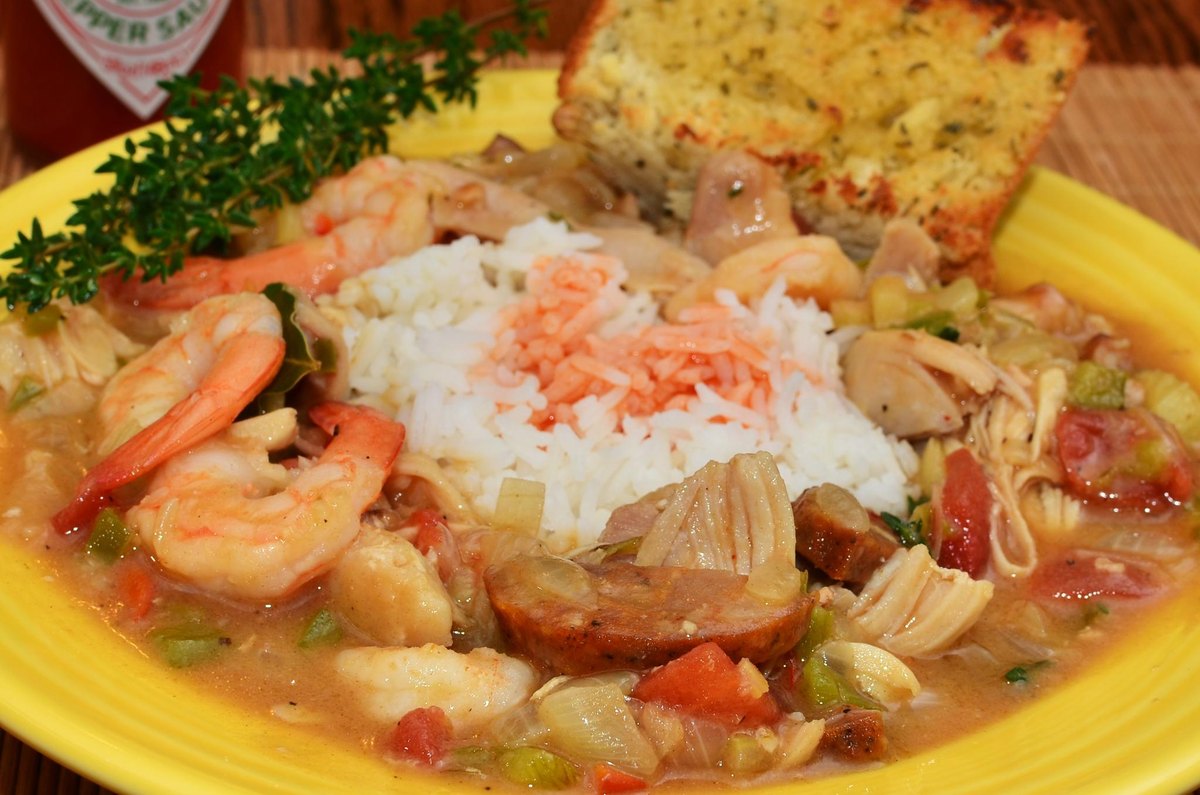
From a simple sausage gumbo with shrimp in it, all the way out to a full seafood gumbo.
That is not indecision. Gumbo rewards it — change the protein, change the thickener, change the roux, and you have made a genuinely different dish rather than a variation on one.
The two families
Almost every gumbo sits in one of two camps, and they behave differently enough that they are nearly separate dishes.
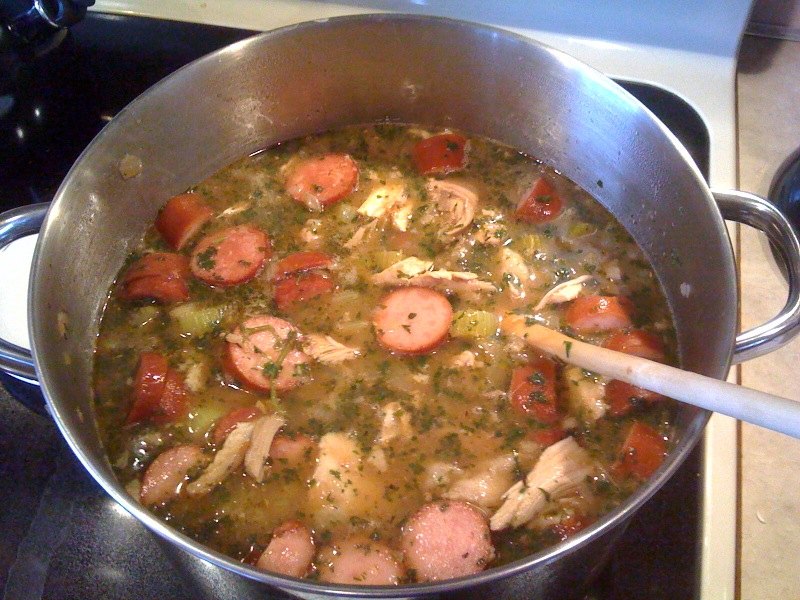
Chicken and sausage. The everyday one, the one that scales, the one that is better the next day. Deeply savoury, forgiving, and it takes a dark roux beautifully — the roasted bitterness of a chocolate roux has enough to push against.
Seafood. Shrimp, crab, oysters, crawfish. Sweeter, more delicate, and much less forgiving of overcooking — this is the one where timing decides everything. Traditionally it leans lighter on the roux, because a near-black roux will flatten shrimp and oysters rather than support them.
⭐ And the thing I keep coming back to: the two ends of my own range are not the same dish at all. A sausage-and-shrimp gumbo is essentially the first family with a seafood accent. A full seafood gumbo is the second family committed to. Working across that span is most of what “refining” has meant for me.
🔴 The timing rule for seafood
This is where good gumbo goes wrong most often after the roux.
Seafood goes in at the end. Almost always the last few minutes.
Shrimp need about three to five minutes in a simmering pot. Longer and they go rubbery, and they do not come back.
Oysters need less — a minute or two, essentially just until the edges ruffle. ⭐ And their liquor is worth more than the oysters in flavour terms. The Picayune’s oyster gumbo is built on two quarts of oyster liquor and only a quart of plain water: the broth is the oysters’ own water, and there is no other stock in it at all. If you buy oysters, keep every drop.
Crab goes in earlier and can take it, because you want the shells giving up flavour. Whole or halved blue crabs simmered in the pot are the traditional move and they are worth the mess.
Crawfish tails are usually already cooked — treat them like shrimp and add them at the very end.
⚠ The practical consequence: a seafood gumbo cannot really be made ahead. You can build the base a day early — and should, it improves — but the seafood goes in when you are serving. A chicken-and-sausage gumbo is genuinely better on day two; a seafood gumbo is worse. That single fact should decide which one you make for a crowd.
The sausage
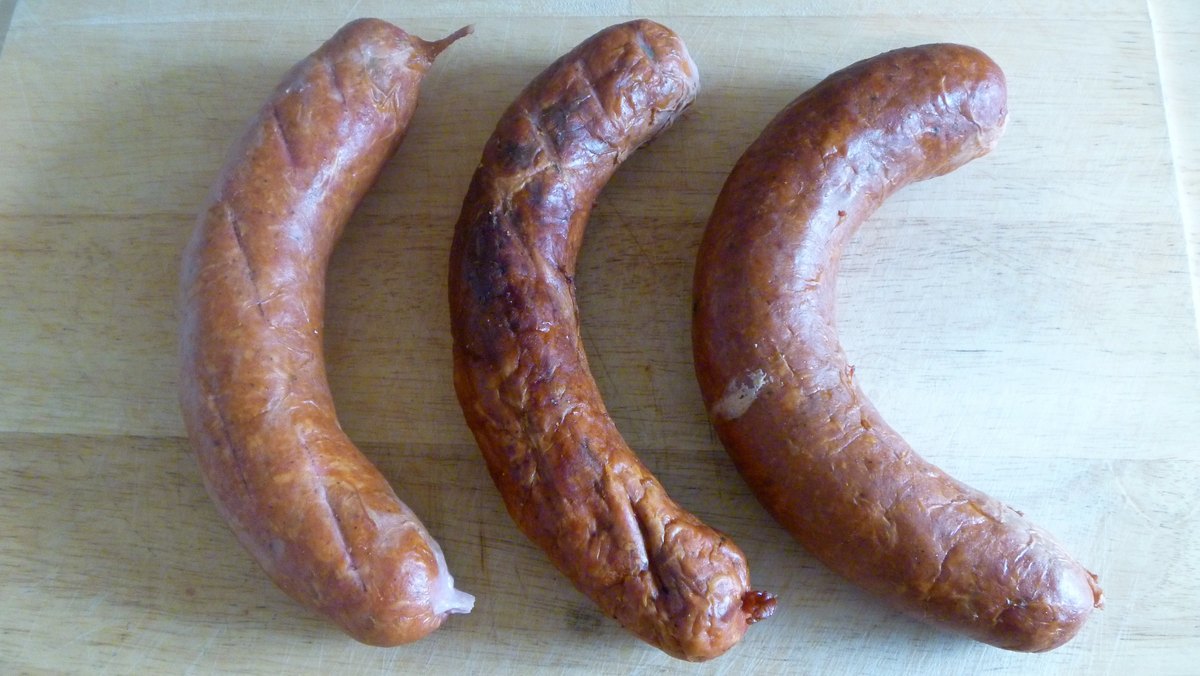
Andouille is the Louisiana one: coarse, heavily smoked, garlicky, assertive. ⚠ It is not the same thing as French andouille, which is a tripe sausage and a completely different animal — I’ve written about that elsewhere and the shared name confuses people constantly.
Any good smoked sausage works. Purists will disagree; the pot will not. What matters is that it is properly smoked, because that smoke is doing structural flavour work in the broth.
Tasso is not a sausage but belongs in this conversation — heavily seasoned, intensely smoked cured pork shoulder, used as a seasoning meat rather than a portion. A little goes a long way and it is one of the most distinctly Louisiana things you can put in a pot.
⭐ Brown the sausage first and use the rendered fat in the roux. It is the single easiest upgrade available: you get the smoke into the fat, and the fat into the flour, and it runs through the entire pot. The fat is one of the three roux variables and this is the cheapest way to exploit it.
The chicken
Thighs, not breasts. A gumbo simmers, and breast meat goes dry and stringy in a way thighs simply don’t.
Bone-in is better if you have the patience, because the bones give the broth body — which matters especially in a dark-roux gumbo that isn’t getting thickening from the flour.
⭐ And an old bird is the traditional choice, for a reason worth knowing: gumbo was a way to make a tough stewing hen delicious. That is what long simmering is for. The Picayune calls for a large tender chicken cut up as for a fricassee, which tells you the dish was always somewhere between soup and stew.
The trinity, and what actually seasons it
Onion, celery, bell pepper — and the reason the carrot dropped out of the French original is agricultural, not aesthetic.
Garlic goes in after, not with — it burns faster than the other three.
⭐ The most important seasoning decision is when you salt. A gumbo reduces over hours, and the sausage, tasso and stock are all salty already. Salt at the end. I have over-salted more pots by seasoning early than by any other mistake.
Filé, cayenne, black pepper, thyme, bay. ⚠ And filé goes in off the heat, or at the table — never in a boiling pot.
Tomato, and the argument about it
Creole gumbo tends toward tomato; Cajun gumbo tends away. That is a real tendency and a useful rule of thumb.
⚠ It is not a law, and the same caution applies here as on the Cajun and Creole page — the city-versus-country framing that usually comes attached to it is an oversimplification the sources reject.
⭐ What I’d say practically: tomato and okra belong together — the acid cuts okra’s ropiness, which is very likely why the Picayune’s okra gumbo carries six large tomatoes. Tomato with a very dark roux is a harder balance, because you are asking acid and roasted bitterness to share a pot. Not impossible. Just a decision rather than an ingredient.
My gumbos: Gumbo, New Orleans Creole · Andouille Sausage Gumbo · Gumbo, Seafood, Chicken and Andouille Sausage · Gumbo, Shrimp · Gumbo, Rabbit and Sausage (Keto)
Next: Gumbo Z’Herbes — the green one, and the one with a rule about counting.
Comments (0)