Beef Noodles and Plum Soup
12 March 2026, half past six in the evening. A noodle shop, a bowl, and a can — and the can is the reason this page exists.
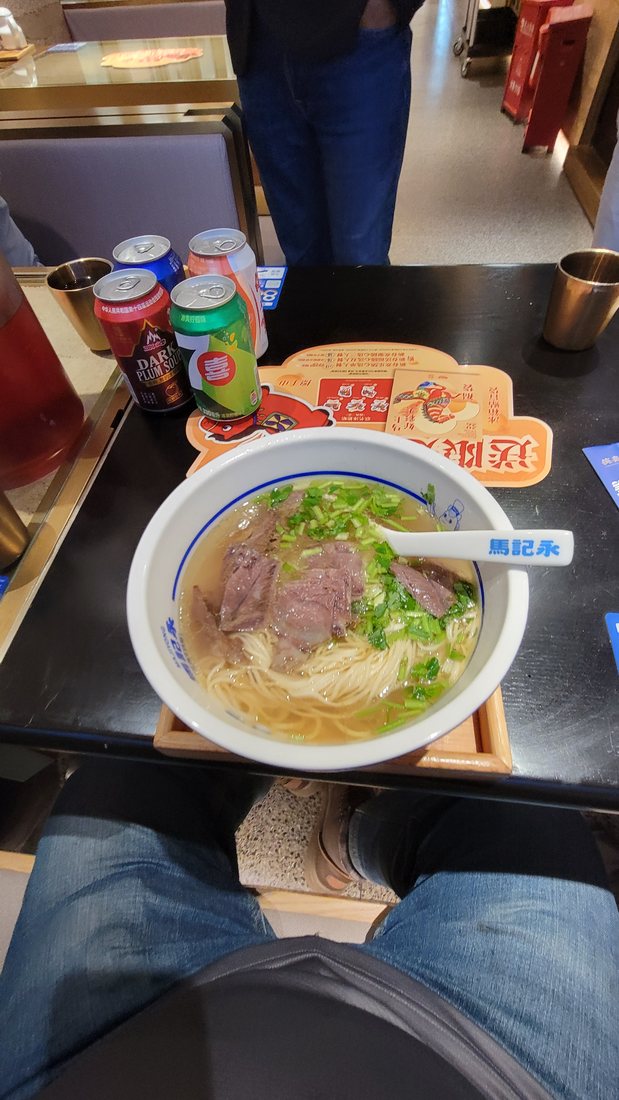
The bowl
Clear broth. Thin wheat noodles. Sliced beef. A great deal of green onion, and some leafy greens.
The shape and the service style read as Lanzhou-lineage beef noodle soup — 兰州牛肉面, which is the dominant style of clear-broth beef noodle in China and the one this bowl most resembles.
⚠ Lineage, not the shop’s own claim. I could not read the sign, I did not ask, and a great many noodle shops serve something in this family without being a Lanzhou house. The bowl looks like what it looks like; the shop stays unnamed.
What is worth saying regardless is what makes this style distinctive, because it is the opposite of what most Americans expect from “beef noodle soup”:
- The broth is clear, not dark. No soy braise, no thickening. It is a long-simmered, skimmed, aromatic stock and it is meant to look like water and taste like beef.
- The noodles are hand-pulled, in graded thicknesses you can order by name.
- The chilli oil goes on top at the end and floats — it is a layer, not an emulsion.
The Taiwanese red-braised beef noodle that most Western diners meet first is a different dish with the same English name. That confusion is worth clearing up once: dark, soy-braised, tomato and star anise, is Taiwan; clear, white-radish, green onion, is Lanzhou.
The can, which is the real find
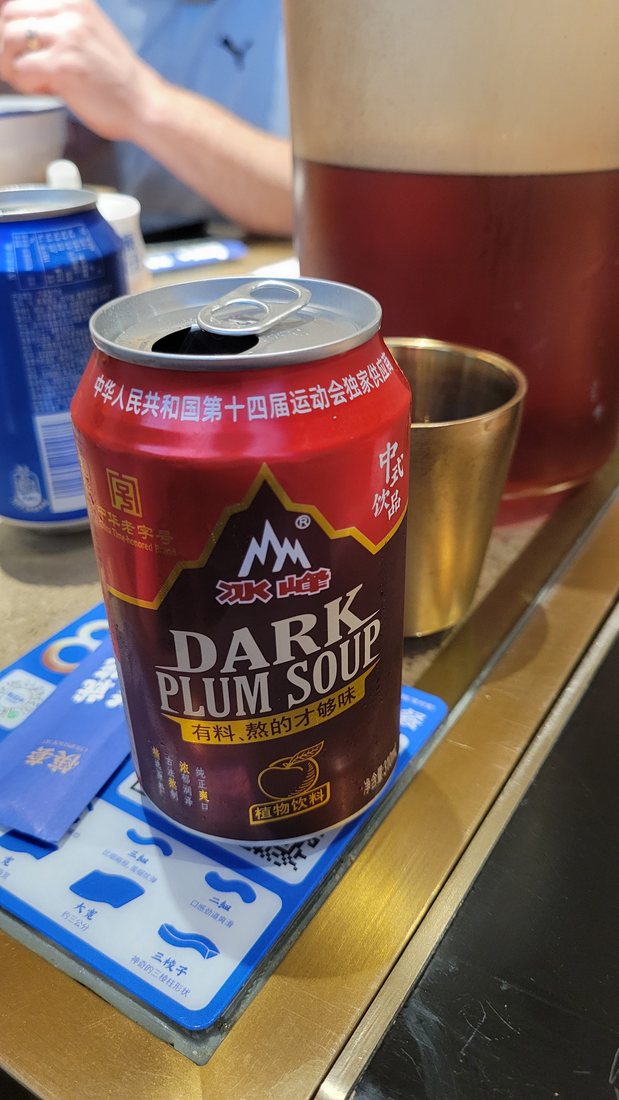
酸梅汤 — suān méi tāng — and the English on the can says “DARK PLUM SOUP”, which is a charmingly literal translation of a thing that is neither dark nor a soup by the time you drink it.
It is a cold, sour-sweet drink, and it is the single most useful thing I found in China, because it is the exact drink that whole cuisine needed and I had never come across it.
Here is why it matters. You have just eaten a bowl of noodles, or worse, an hour of málà hotpot. Your mouth is hot, numb and coated in beef tallow. Water does nothing — it moves the chilli oil around. Beer is cold but it is also fat-friendly and does not cut anything.
Sour does. A sharply acidic, cold, slightly smoky drink resets your palate between mouthfuls in a way nothing else on the table can, and that is precisely the job suān méi tāng is doing on Chinese tables next to the spiciest food in the country.
⭐ And the ingredient is a preserved fruit, not a fresh one. The base is 烏梅 wūméi — smoke-dried, blackened Chinese plum — plus hawthorn, liquorice root, osmanthus and rock sugar, simmered and chilled. The smokiness in the glass is not an additive; it is the drying method, showing up in the drink hundreds of years later.
⚠ And the botanical footnote I have made before on this site and should make again: the Prunus mume that becomes wūméi is not a plum. It sits in section Armeniaca — it is closer to an apricot. I found this out the hard way writing the pickled section about Japanese umeboshi, which is the same fruit under a salt cure instead of a smoke-dry. Same fruit, two countries, two entirely different preservation traditions — one gives you the sourest thing in a Japanese lunchbox, the other gives you a soft drink.
That is the best single connection I brought home from this trip, and I did not notice it until I was sitting at a desk in Michigan reading the label off my own photograph.
Afterwards: the beer hall
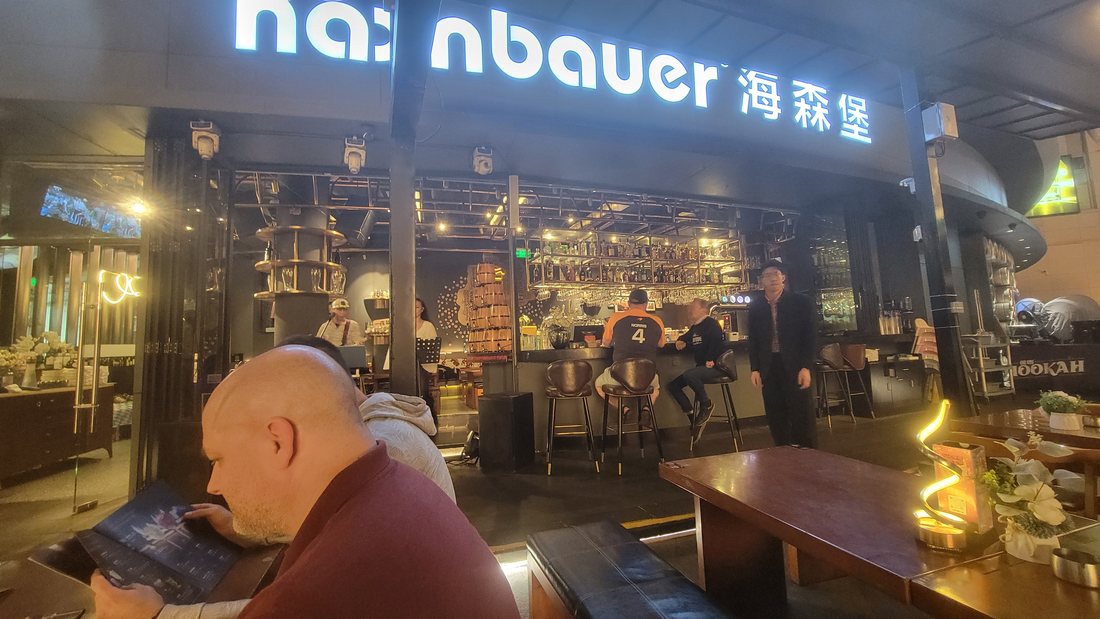
Unrelated, and I am including it because it was real: 11 March, twenty to nine in the evening, straight after the hotpot, we went to Haxnbauer 海森堡 — the Shenzhen branch of the Munich roast pork knuckle house.
Chongqing hotpot at six, Bavarian beer hall at half past eight, in Shenzhen. That is a very 2026 sentence and it is a fair picture of what a large Chinese city is now. I am not going to build an argument out of it.
That is Shenzhen. Next in this section: Vietnam, the second half of the trip — or the last stop at Narita that ended it.
Comments (0)