The Round Table
13 March 2026 was my last full day in Shenzhen, and I ate two completely different meals in it — a formal banquet lunch and a loud, red-checked dinner. Between them they cover most of what eating for work in China actually looks like.
Lunch: 又一楼
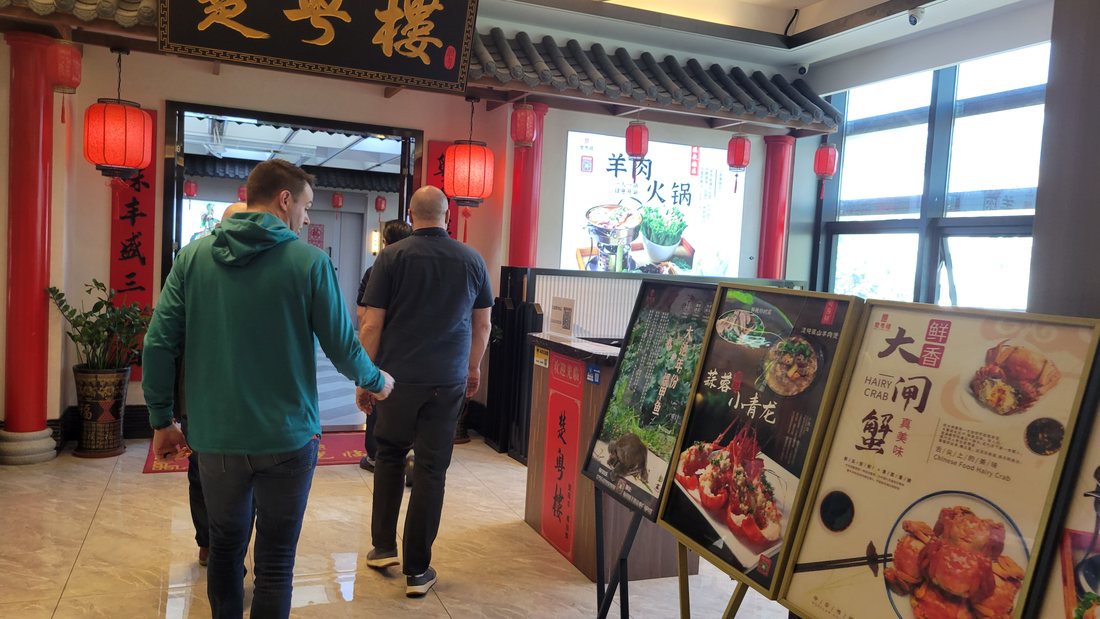
又一楼 (Yòu Yī Lóu) is a banquet restaurant, and everything about the room says so: a private room, a large round table, a lazy Susan in the middle, and a place setting for everybody.
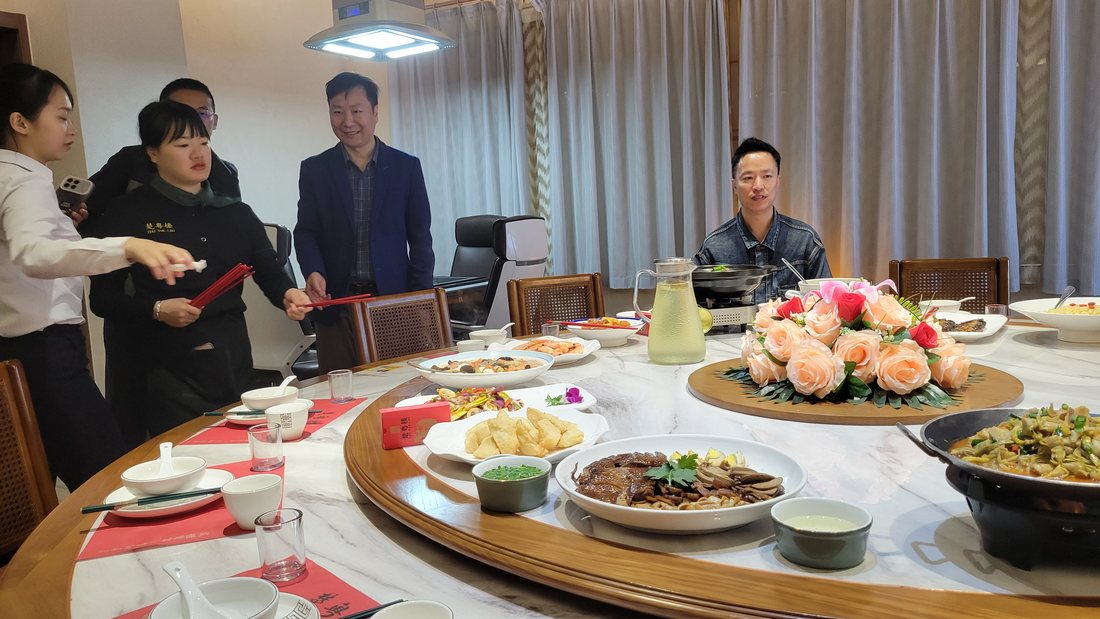
⭐ The lazy Susan is the point, and it is not about convenience. On a round table with a turning centre, there is no head of the table and no served plate. Every dish is equidistant from everybody. Nobody gets their own portion; nobody is served first; nobody is served last. You take a few bites’ worth, and the food comes back around.
Compare the shape of a Western business lunch — a rectangular table with ends, individual plates, your own food that arrives when the kitchen sends it. The Chinese banquet table is built so that a group of people eat the same meal at the same time, and the geometry enforces it.
I ate a lot of business meals in that fortnight and this one is the one whose architecture I keep thinking about.
⚠ The boards outside advertise 羊肉火锅 (lamb hotpot) and 大闸蟹 (hairy crab). Those are the restaurant’s posters, not our lunch — and March is out of season for hairy crab anyway. On the table, from the photographs: a whole fried fish, prawns, a sizzling clay-pot dish, greens, and several stir-fries. Individual dishes I am not going to name from this angle.
Dinner: 民以食为天
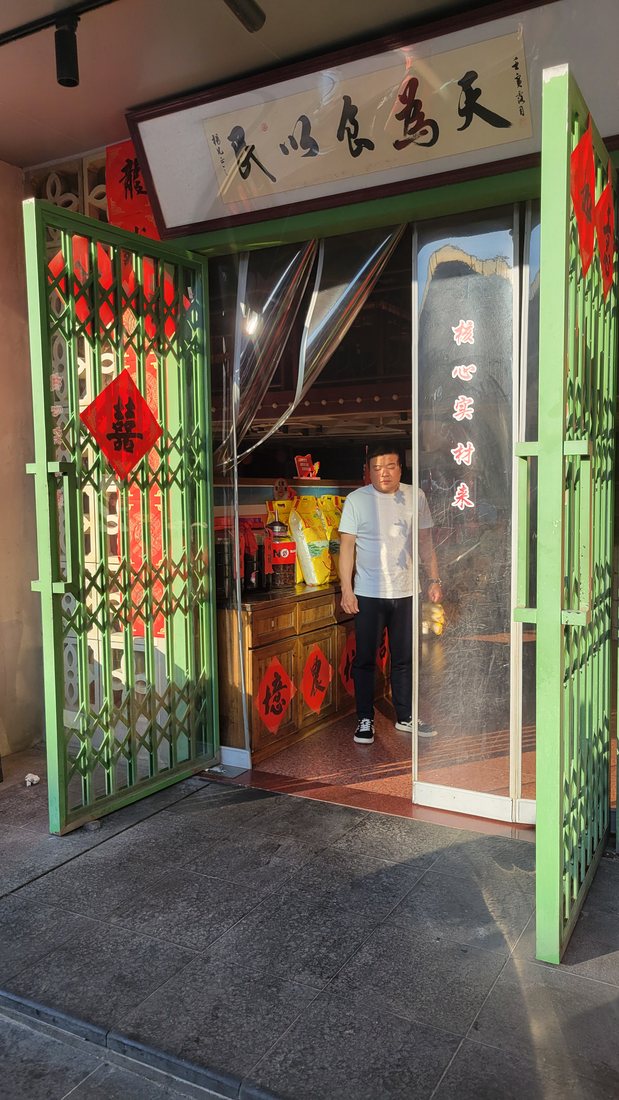
Completely different room, five hours later. Brick walls, red-checked tablecloths, a blackboard, and a plaque by the door reading 民以食为天.
That phrase is one of the most-quoted things in Chinese food culture, and it translates roughly as “the people regard food as heaven” — or, less poetically and more accurately to how it is used, food is the people’s first necessity. ⚠ It is traditionally attributed to the Han dynasty and turns up in the early histories; I am giving you the meaning, which is not in dispute, and hedging the attribution, which I have not chased to a primary source.
Putting it on a plaque by the door of a busy, cheap, brick-walled restaurant is roughly equivalent to a British chippy hanging up a line from Shakespeare — a genuinely old and serious phrase doing duty as a sign.
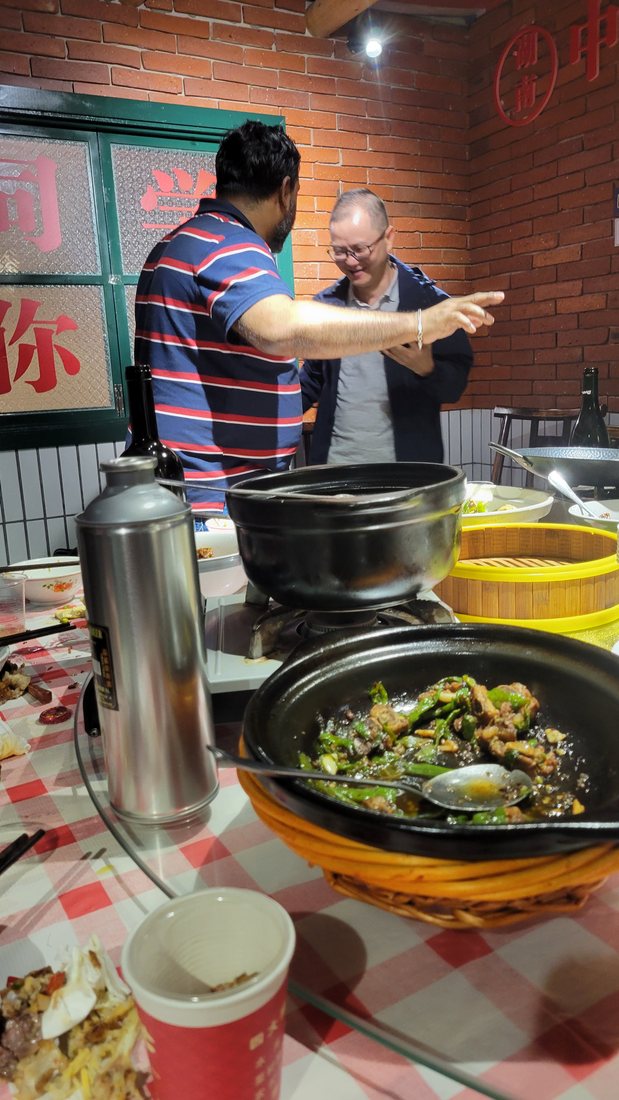
The advertising boards here pushed 千岛湖水煮活鱼 — Qiandao Lake–style boiled live fish. There was a white-broth casserole with fish and green onion on our table.
⚠ Whether that casserole was the advertised dish, I do not know. It is a reasonable reading of the picture and it is not a fact, and I am flagging it rather than quietly writing “we had the Qiandao Lake fish.”
The growlers
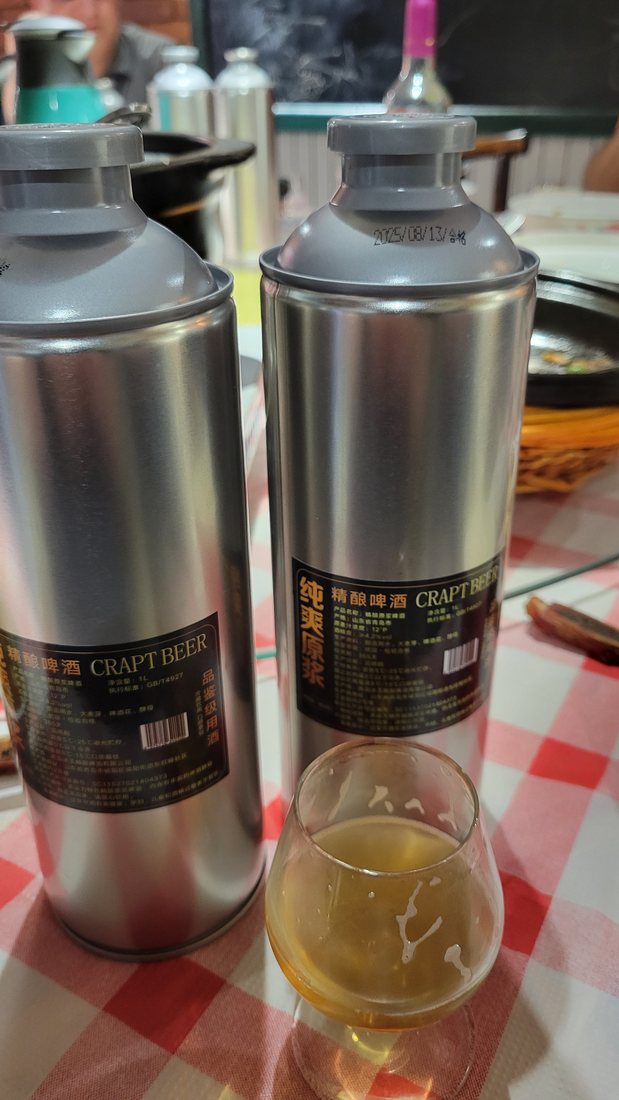
精酿啤酒 — craft beer — served in steel growlers to the table.
This is the detail that most surprised me and it is the one I would most want to explain to someone who has not been to a Chinese city recently. The mental picture a lot of Americans still carry is warm lager in green bottles. What arrived was cold craft beer in insulated steel, poured at the table, in a neighbourhood restaurant, as the completely normal way to drink beer with dinner.
Next: Beef Noodles and Plum Soup — the two things I most want to make at home.
Comments (0)