Vessels and Gear
Almost none of this is required. You can make a very good steamed egg with a plate, a pot and a lid. But the vessel changes the dish more here than in most cooking, because it controls how heat reaches the custard — and heat is the whole game.
Steamers
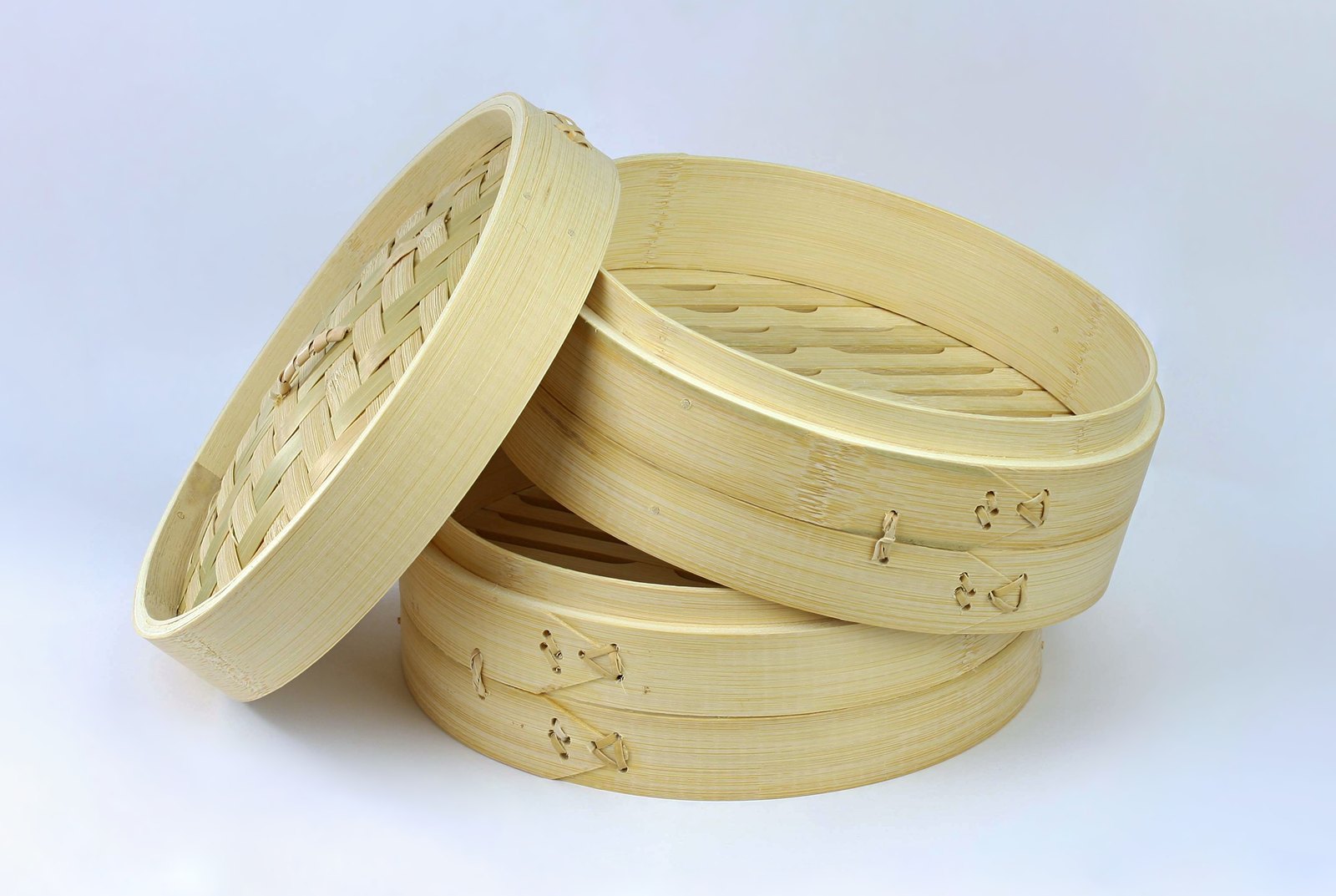
A bamboo steamer over a wok is the traditional Chinese setup and it has one real advantage beyond looks: bamboo absorbs condensation rather than dripping it back onto your food. That’s exactly the problem that pits a custard. It’s the one piece of kit here I’d actively recommend.
A metal steamer insert in a saucepan works perfectly well. ⚠ The lid will drip, so cover the dish.
A plate on a ring inside a covered pot is the improvised version and it’s completely legitimate. Anything that holds the dish above simmering water — a metal cookie cutter, a small trivet, a ball of foil — will do it.
A rice cooker with a steam setting, or an electric steamer, will do this well and hold a gentle temperature better than a burner does.
⚠ What I would not use: a pressure cooker. Too hot, and no control over the one variable that matters.
The cups
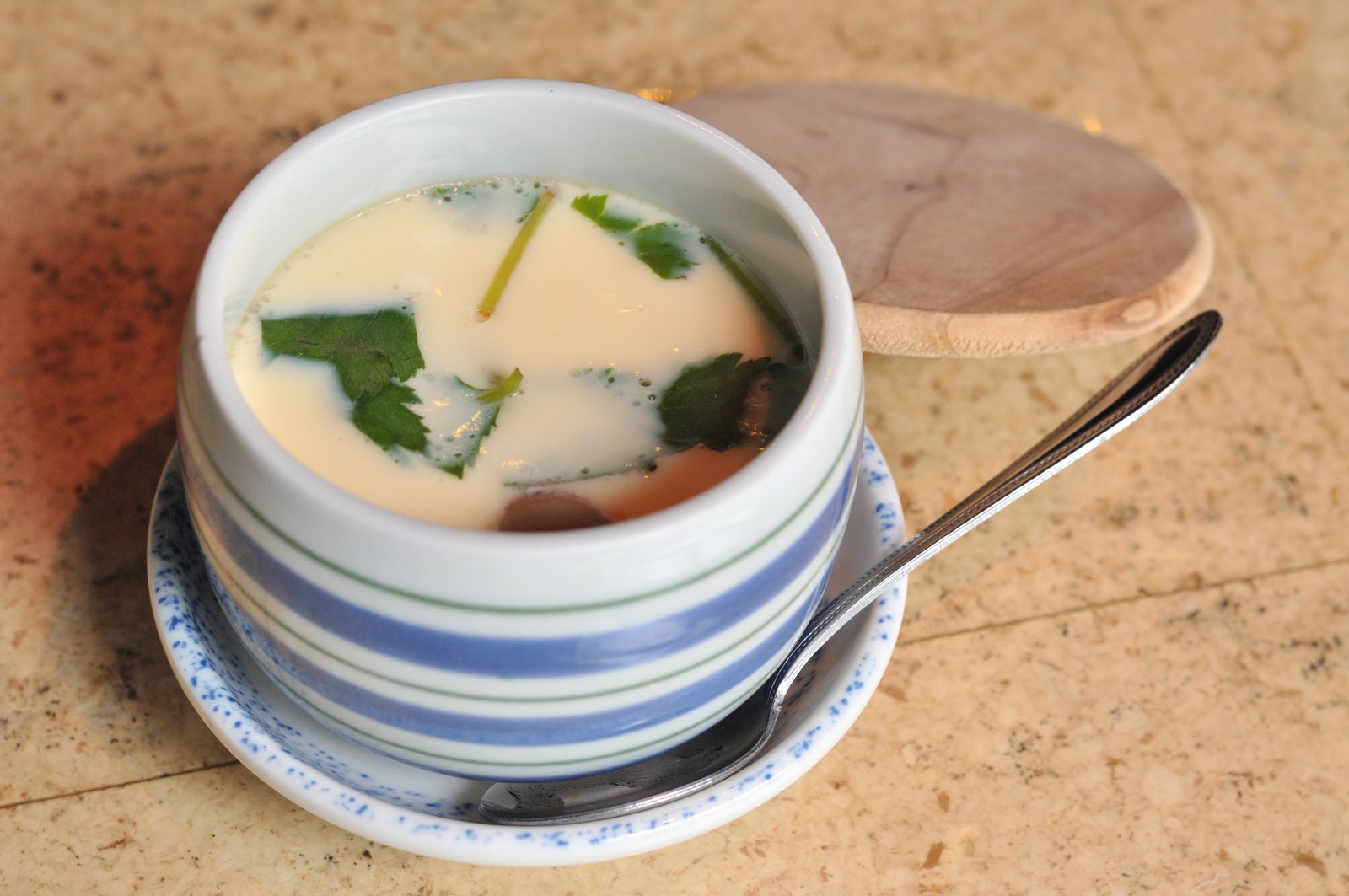
Chawanmushi cups — lidded, taller than wide, ceramic. The lid keeps condensation off, moderates the heat and gets the dish to the table hot. They’re inexpensive and they make the Japanese version look like itself.
Ttukbaegi — Korean earthenware, and the only vessel on this page that goes over direct flame. Thick walls, huge heat retention, browns the bottom of gyeran jjim and arrives at the table still bubbling. ⚠ Season a new one before use, and never shock it from hot to cold — they crack.
Ramekins, small bowls, teacups — all fine, all work, all want covering with foil.
A shallow, wide dish rather than a deep one is the underrated choice for the Chinese version: it cooks faster and more evenly, and the surface-to-depth ratio is what makes the classic restaurant presentation possible.
Covering it
🔴 The one non-negotiable. Foil, a lid, a plate, cling film — something between the steamer lid and the surface of your custard. Uncovered, every drop of condensation leaves a crater and you will see all of them.
The small tools that actually matter
- A fine sieve. ⭐ Fifteen seconds of straining is the highest-return step in the entire dish.
- A kitchen scale. Eggs vary more than recipes admit. Weigh the eggs, multiply by 1.5, add that much liquid. This one change fixes most inconsistency.
- Chopsticks or a fork for mixing — you want combined, not aerated. A whisk works against you.
- A spoon or paper towel for skimming foam off the surface before it goes in.
- A chopstick laid across the pot under the lid to vent a little steam and drop the temperature. Cheapest trick in the dive.
The espresso machine
Covered properly on its own page, but for completeness: a machine with a real steam wand — one you can put into a vessel and control — cooks eggs in 30–90 seconds by injecting steam directly. A pod machine’s automatic frother won’t do it.
⚠ And it needs cleaning immediately, because egg protein bakes onto hot metal faster and harder than milk does.
What you don’t need
A dedicated egg steamer. They exist. They’re for boiling eggs in the shell, they don’t do this, and the name is misleading.
Anything non-stick. The custard releases fine from ceramic or glass and you’re not going to be scraping.
A thermometer, mostly. You can chase 80 °C precisely and it will work beautifully, but “water at a bare simmer, dish covered, low heat” gets you there without one.
In this dive: The story · The science · China · Japan · Korea · Elsewhere · The espresso steam wand
Comments (0)