The Espresso Steam Wand: Ninety Seconds, Different Physics
This is how I make steamed eggs most mornings, and it is not a gimmick. It’s a genuinely different cooking method that happens to use a machine already sitting on the counter, and the reason it works isn’t the reason people usually give.
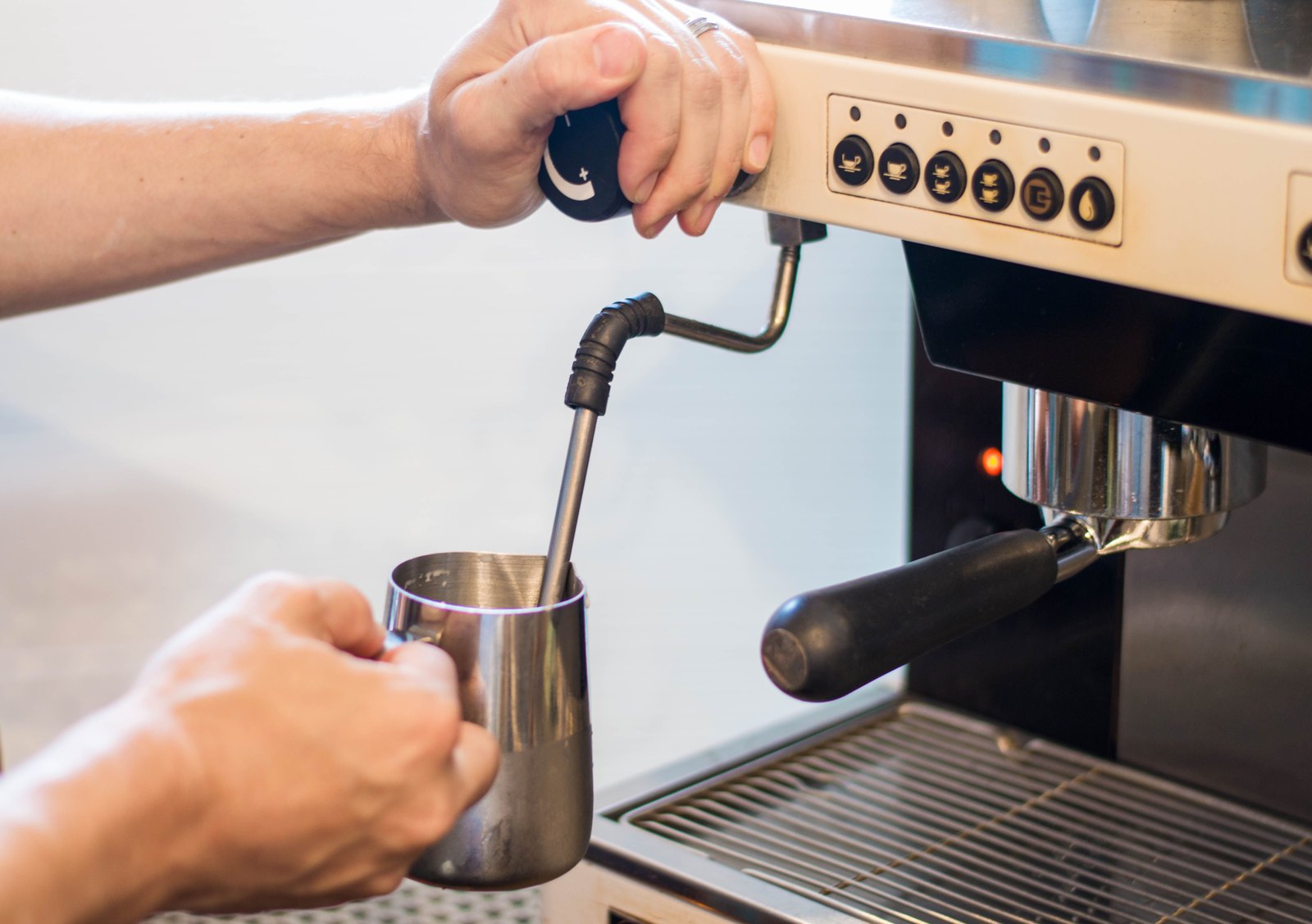
What’s actually different about it
Every other method in this dive uses steam as an indirect heat source — the dish sits above the water, and hot vapour warms the outside of it. The whole science page is about keeping that heat gentle enough not to wreck the custard.
A steam wand injects live steam directly into the egg, and that changes three things at once:
- The heat arrives everywhere at once. No waiting for it to conduct inward from the walls of a dish. This is why it takes 30–90 seconds instead of 12 minutes.
- The steam condenses into the mixture and becomes part of it. ⭐ The wand is adding liquid as it cooks — so you start with less than you would otherwise, because the machine tops it up for you.
- It agitates violently, which means you get a fine, aerated, mousse-like texture rather than a smooth set gel.
🔴 So the result is not chawanmushi, and it isn’t zhengdan. It’s its own thing — somewhere between the world’s silkiest scrambled eggs and a savoury foam. Don’t go in expecting the trembling custard from the other pages; go in expecting something lighter and frothier than any pan can produce.
Where it comes from
It’s a barista trick that escaped. The best-documented home of it is Café El Polo in Salamina, Colombia, where steamed eggs in a mug are the house specialty — a café making breakfast with the machine it already had. It’s since been picked up widely, including by Martha Stewart and J. Kenji López-Alt, which is roughly the moment a kitchen hack stops being a hack.
The method
Total time: about two minutes, most of it cleaning.
- Beat 2–3 eggs in a metal milk pitcher or a sturdy heatproof mug. A pitcher is better — the spout and the depth both help.
- Season now, not later. Salt, and whatever else the version calls for.
- Add a small splash of liquid — much less than you’d use for steamed egg, because the wand adds its own. A tablespoon is plenty for three eggs.
- 🔴 Purge the wand first. A short blast into a cloth clears the condensed water sitting in the line. Skip this and you get a slug of plain water into your eggs.
- Submerge the tip below the surface — you are heating, not frothing, so keep it under. Angle it so the mixture turns.
- Full steam. Move the pitcher — up, down, and around — so nothing sits against the tip and overcooks.
- 30–90 seconds. Stop while it still looks slightly wetter than you want. ⚠ It carries over hard — the pitcher is hot and the eggs keep setting.
- Into the cup, dress it, eat it immediately.
🔴 Cleaning: the part that is not optional
Egg protein bakes onto a hot steam wand exactly like milk protein does, only worse, because egg sets harder and faster.
- Purge the wand immediately after — two or three seconds of steam to blow out anything drawn back into the tip.
- Wipe it down while it’s still hot, with a dedicated cloth. Once it cools, cooked egg on hot metal is genuinely difficult to shift.
- ⚠ Do not let it sit. This is a five-second job done now and a scrubbing job done later.
If you’re precious about your machine, that’s a real reason not to do this. If you already steam milk daily, it’s the same discipline you already have.
My version
Steam Wand Eggs, Dashi and Furikake — this is the one I actually make.
Dashi instead of water. A few drops of sesame oil. Soy sauce. Furikake over the top.
⭐ The dashi is doing exactly what it does in chawanmushi — bringing a savoury depth that salt alone can’t — but here it arrives in ninety seconds instead of fifteen minutes. It is, in a real sense, chawanmushi’s flavour on a weekday schedule.
The sesame oil goes in at the end, off the heat, because heating it flattens the aroma. The soy is light soy, and less than you think. The furikake on top gives salt, nori, sesame and a bit of crunch against something that has no texture of its own at all.
Steam Wand Scrambled Eggs is the plain version — eggs, butter, salt — and it’s the one to learn the timing on before you start adding things.
Steam Wand Egg, Chawanmushi-Style pushes it further toward the Japanese dish: much more dashi, softer, eaten with a spoon, with a shrimp and some mitsuba dropped in at the end.
What it’s good and bad at
Good at: speed. Texture you cannot get in a pan. One or two portions. Not heating a pan or washing one. Making something that feels considered in under two minutes.
Bad at:
- ⚠ Volume. Two or three eggs is the practical limit; a pitcher of six will cook unevenly and overflow.
- ⚠ Control. It’s fast and hot and the window between perfect and rubbery is a few seconds wide.
- ⚠ Anything you want smooth and set. The agitation makes that impossible by design. For that, go back to the steamer.
And it needs a real steam wand. A pod machine’s automatic milk frother won’t do it — you need to be able to put a naked wand into a vessel and control it.
In this dive: The story · The science · China · Japan · Korea · Elsewhere · Vessels and gear
Comments (0)