Cast Iron Use & Care
Cast iron is the most forgiving cookware there is, and the most misunderstood. The short version: use it often, keep it dry, and give it a little oil. Do that and a skillet will outlast you and cook better every year. This is the care routine I follow, drawn from Lodge’s own guidance and a lot of years at the stove.
Everyday Care
A clean cast-iron pan does not need much:
- Wash by hand with warm water and mild soap, or with no soap at all. A little soap will not strip a well-established seasoning, despite the old myth.
- Dry promptly and thoroughly with a lint-free cloth or paper towel. Standing water is the only real enemy of cast iron — dry it right away and rust never gets a chance.
- Rub with a very light layer of oil — vegetable oil works well — preferably while the pan is still warm. Wipe out the excess so it is barely there.
- Store in a dry place. Hang it or set it on a rack. That is it. You have just preserved a future heirloom.
Skip the dishwasher, metal scouring pads, and harsh detergents — those will harm the seasoning.
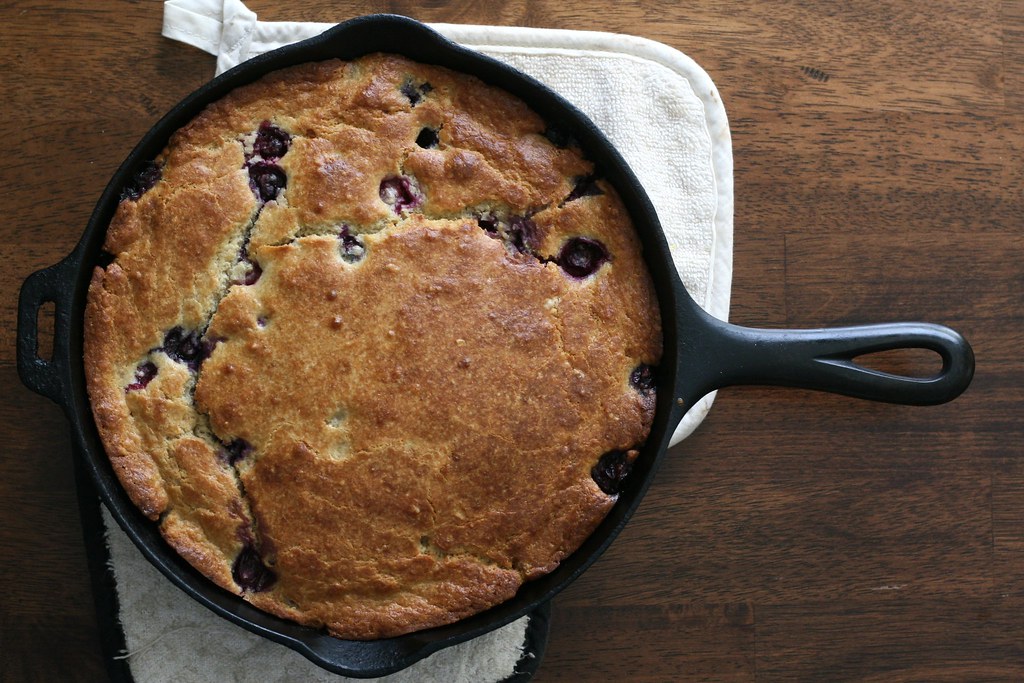
A well-seasoned skillet, ready for the next meal. Photo: “Baking in Cast Iron Skillet” by Chiot’s Run, licensed under CC BY-NC 2.0, via Flickr.
Seasoning Basics
Seasoning sounds mysterious, but it is simply oil baked into the iron, building up a natural, easy-release finish. Lodge pre-seasons all of its cookware with soy vegetable oil and nothing else, so a new pan is ready to cook the moment you unbox it. Seasoning is an ongoing thing, not a one-time event — it gets better and better the more you cook, as each use lays down a little more polymerized oil.
A couple of notes from experience:
- With brand-new cookware, a little extra oil or butter the first few times helps until the surface settles in.
- Acidic foods — tomatoes, wine, some beans — are best saved until the seasoning is well established. Cooked too early or left to sit, acid can eat into a young finish. Once the pan is seasoned in, it shrugs them off.
Let’s Cook
- Rinse and dry any new cookware thoroughly before the first use.
- Use whatever utensils you like — even metal. There is no chemical coating to scratch, so a metal spatula is perfectly fine.
- Lift, do not drag. Cast iron is heavy; set it down gently on glass cooktops and lift rather than slide it across smooth surfaces.
- Preheat it. Cast iron rewards patience — let it come up to temperature and it will sear and bake far better than a thin pan ever could.
Keeping It for Generations
That is really the whole point. A cast-iron skillet asks for almost nothing and gives back decades of cooking. Use it, dry it, oil it, and pass it down. The pan you cook on tonight can just as easily be the one your grandkids fight over later — which, if you have ever tasted cornbread baked in a properly seasoned skillet, is exactly as it should be.
Comments (0)